I was born in 1969 as the fourth daughter in a family of one son and five daughters. In those days, Korea was deeply influenced by the belief that having a son was a blessing. So when my younger brother was born right after me, I suddenly became the “lucky charm” of the family.
We were very poor back then. I still remember following my older sisters deep into the mountains to gather firewood, and how far the elementary school seemed from home. Life was hard, but it built the foundation of who I am today.
Thanks to my eldest sister, who ran a beauty salon in Seoul, I was able to study and finish college there — something I will always be grateful for. In Korea, it was common for siblings to support each other, and our family bond became our greatest strength.
Now, at the age of fifty, I find myself working side by side with my younger brother in my own business. Perhaps it’s my way of repaying the silent debt I’ve carried — for all the times I couldn’t be there for my siblings when I was busy with my career. He works diligently, and I’m filled with gratitude every time I see his dedication. Life seems to have come full circle, and I can’t help but smile at how the little “lucky charm” grew up to share her luck with others.
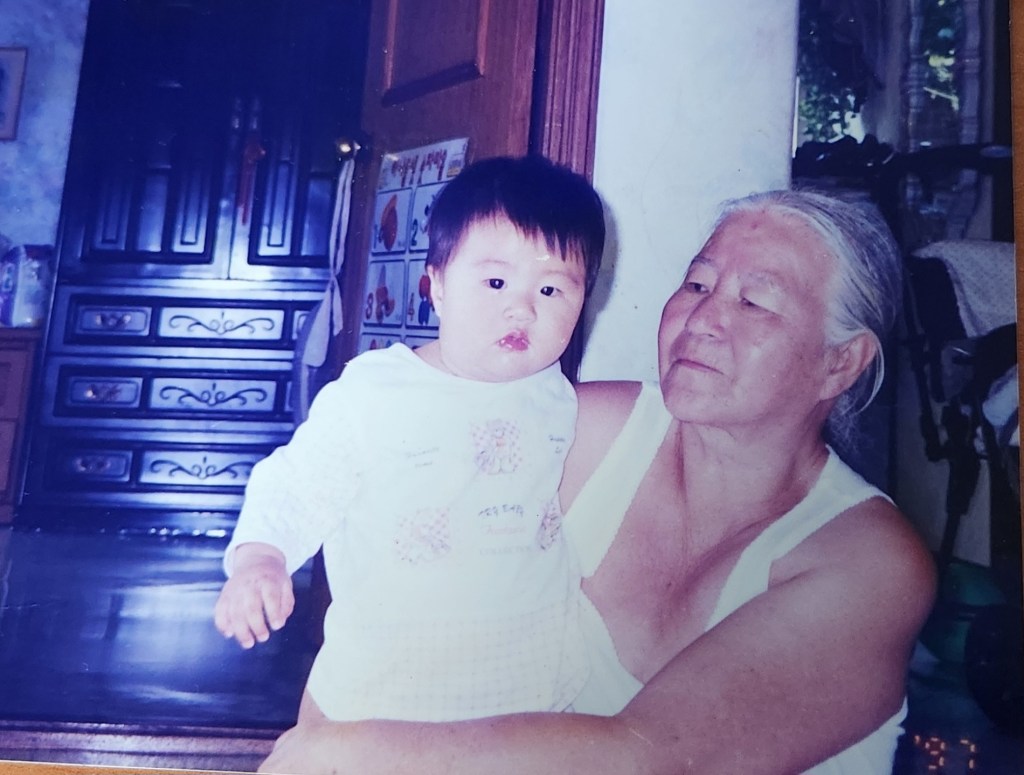
My daughters with the woman who helped raise not just them, but me.
When I got married, I thought life would be simple. My husband is the youngest of six brothers, so I naively believed that if we just worked hard, we could live quietly and peacefully on our own. I knew my mother-in-law had a fiery, almost masculine personality and had frequent conflicts with my sisters-in-law, but I assumed I would be spared.
Then, two months before our first daughter was born, I got a phone call.
“I’m on my way to your house,” she said.
It was a peaceful weekend evening. My husband and I were lounging on the sofa, but after that call, we scrambled in a panic, cleaning the apartment like we were preparing for war. That night marked the beginning of a new chapter: living with my mother-in-law.
Our newlywed life, already tense, grew more complicated. My mother-in-law appeared stern, intimidating—her speech was brusque, almost like an old man’s. But as time passed, I discovered a deeply loving side to her.
My husband had studied architecture and worked in design. It was the early 1990s, and back then, architectural plans were drawn with large T-squares by hand. He worked long hours, often including weekends and holidays. Coming home to a house where someone waited for him—where the lights were on and a warm voice greeted him—meant the world to him.
But the issue arose on the days he was actually home.
I longed to catch up with him, to share conversations we’d postponed all week. But my mother-in-law would quickly interrupt:
“He’s tired. Don’t talk to him. Let him rest.”
I’d quietly retreat to the bedroom, feeling awkward and unwanted. Eventually, I’d doze off—and when I woke and stepped out into the living room, I’d see them chatting away happily.
Even when sharing fruit or snacks, she’d instinctively grab the last piece and hand it to him. Small moments like these left me feeling invisible—pushed aside in my own home.
Do you understand that subtle ache? That confusing mix of hurt and resentment that you can’t quite put into words?
Thankfully, those moments only happened a few days each month. Most of the time, I managed to brush it off.
At work, I often brought lunch from home. We had many women in the office, so it was common practice. Each morning, my mother-in-law would wake up early to pack my lunch. Steamed rice with a fried egg on top—very reminiscent of a 1970s-style lunchbox. If I ever said it was delicious, she would proudly make the same side dishes for weeks.
It wasn’t gourmet, but it was heartfelt.
Looking back, I realize I was able to continue working even after my daughter was born because she was there. Despite the discomfort, despite the moments of emotional distance, I am still grateful to her—for her presence, her help, and her sacrifice.
We were able to move out of a cold, half-basement apartment and slowly build a more stable life. That would have been impossible without her support.
She didn’t always show it gently, but her love was there. Living together wasn’t easy, but it taught me lessons about humility, patience, and what family truly means.
And even now, years later, I carry with me a quiet, enduring gratitude.
Only in her absence did I come to understand how much I had to thank her for.
On the other hands…
Looking back, there were many moments that were difficult, confusing, and emotionally complicated. But above all, what hurt the most was the shift I saw in my husband. He had once shared housework with me, but after my mother-in-law moved in and voiced her disapproval, he stepped back completely. That sudden change—feeling alone in what used to be shared—left a deeper mark than I expected.
Still, her presence in our home brought lessons I never would have learned otherwise.
In my next post, I hope to share more honestly about what it was like living with a strong, sometimes overwhelming, but deeply unforgettable woman—and offer a glimpse into what Korean mothers-in-law were like in our generation.
From a Humble Beginning: Our Journey from a Basement Room to a Sunlit Home
In the early 1990s, after a few meetings, we began to develop genuine feelings for each other. Naturally, thoughts of marriage followed. However, at that time, my husband was struggling with severe financial difficulties, and I, too, couldn’t help but hesitate. Korean society back then was much more conservative than it is now, and the sense of guilt and responsibility from a premarital relationship eventually led us to get married.
Because neither of us had much, our newlywed home was a semi-basement room. It was damp and dark. During the summer monsoon season, rainwater would seep in, and sometimes our belongings would float across the floor. Mold grew easily on our clothes and bedding. Despite all that, we held onto the belief that we were young and, with enough effort, things would eventually get better.
But after we got married, our financial situation didn’t improve easily. Then, the 1997 IMF financial crisis hit, making things even harder for everyone. It was a time full of fear and uncertainty. Still, I gathered the courage to cash out part of my severance pay and invested all of it in the domestic stock market. It was a risky decision in such an unstable climate, but that bold step slowly began to change our lives.
As a result, we were able to move from a semi-basement rental with a ₩30 million deposit to a two-story home with a ₩60 million deposit. With that change in our environment, our hearts felt lighter. Looking back on the dark, cramped semi-basement—our possessions floating during floods, the smell of mold in the bedding—I can truly feel just how far we’ve come.
It wasn’t easy, but we never gave up. Every decision we made during those tough times helped build the life we have today.
It was in that semi-basement room that my first daughter was born. She has grown into a healthy, beautiful young woman and is now working professionally. And my husband—who stood by me and believed in me even when everything around us felt unstable—was far from ordinary.
Soon after we moved into our bright and airy two-story home, our second daughter was born. The sun shone through the windows, and the breeze flowed freely. It felt like a brand-new beginning.
Now, decades later, I look back on those days with a deep sense of gratitude. Life didn’t hand us anything easily—but through patience, bold choices, and unwavering belief in each other, we built something beautiful.
If you’re facing hard times, remember this: even a dark, flooded room can be the beginning of something bright.
How I Met My Husband—and the Funny Story of Who Raised Him
I met my husband by chance during our university years. He was gentle, soft-spoken, and always considerate of those around him.
What first drew me in wasn’t just his kind heart—it was also his quiet confidence, his good looks, and the way he naturally offered to pay for meals during group outings. He never did it to impress anyone. That was just who he was.
Later, I learned that he was the youngest of six siblings—the baby of the family. But as I got to know him better, I discovered a story that still makes me smile.
Incredibly, both my husband’s mother and his eldest sister gave birth in the same year: 1966.
At the time, my mother-in-law was in her early 40s and didn’t know she was pregnant. Feeling weak and ill for weeks, she assumed the worst—that she was gravely sick. She stayed in bed, bracing for bad news. But instead, she gave birth to a healthy baby boy.
Because she was too weak to care for the newborn and couldn’t produce enough milk, she entrusted him to her eldest daughter—who had just had a baby girl of her own.
So my husband and his niece grew up together under the same roof in Seoul, more like siblings than uncle and niece.
His older sister, barely done becoming a mother herself, stepped naturally into a motherly role for him as well. She’d take her daughter to the neighborhood bathhouse one day, and my husband the next.
One day, a local woman recognized her at the bathhouse and said, “Oh! I heard you had a baby girl—but it looks like you had a boy!”
Too shy to explain that the baby boy was actually her little brother, my sister-in-law simply smiled awkwardly and made a quick exit.
We still laugh about that story to this day.
I’m deeply grateful to both my mother-in-law and sister-in-law for the love and care they poured into raising him. Thanks to them, I met a man who is not only kind and handsome—but who grew up surrounded by quiet, enduring love.
In Korean families—especially big ones—love doesn’t always follow neat lines. It flows in every direction. Sometimes, the people who raise us aren’t just our parents, but our sisters, aunties, and anyone who shares the roof—and the warmth.
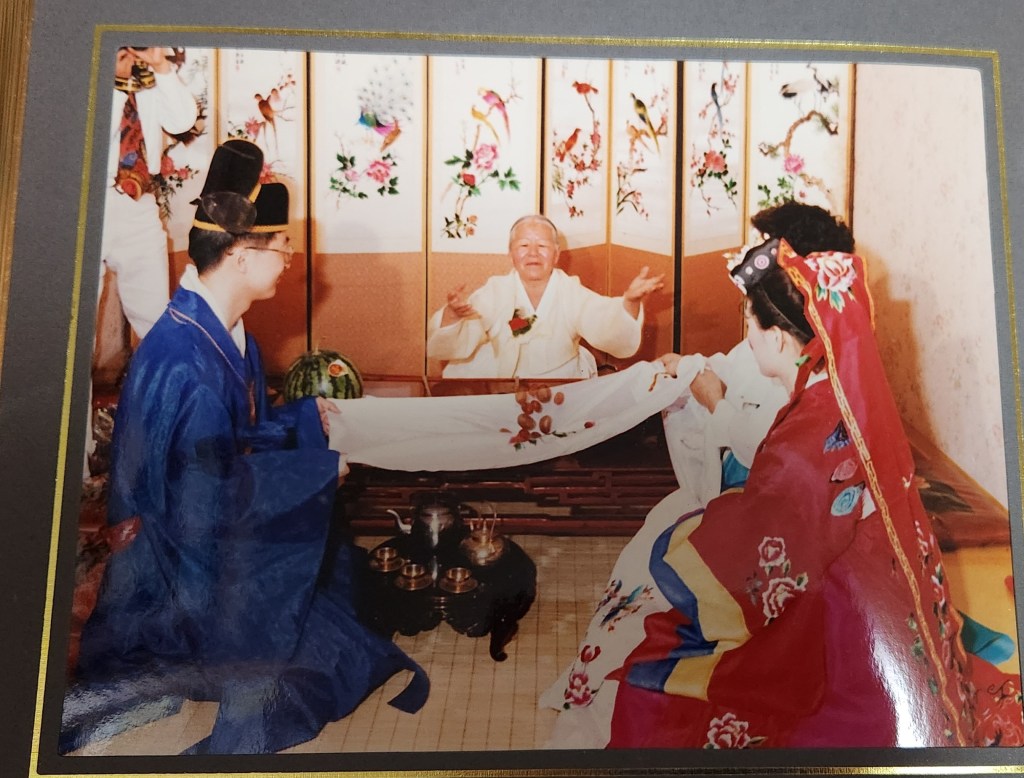
My husband’s eldest sister is on the left, and my dear mother-in-law is on the right.



 Site Title